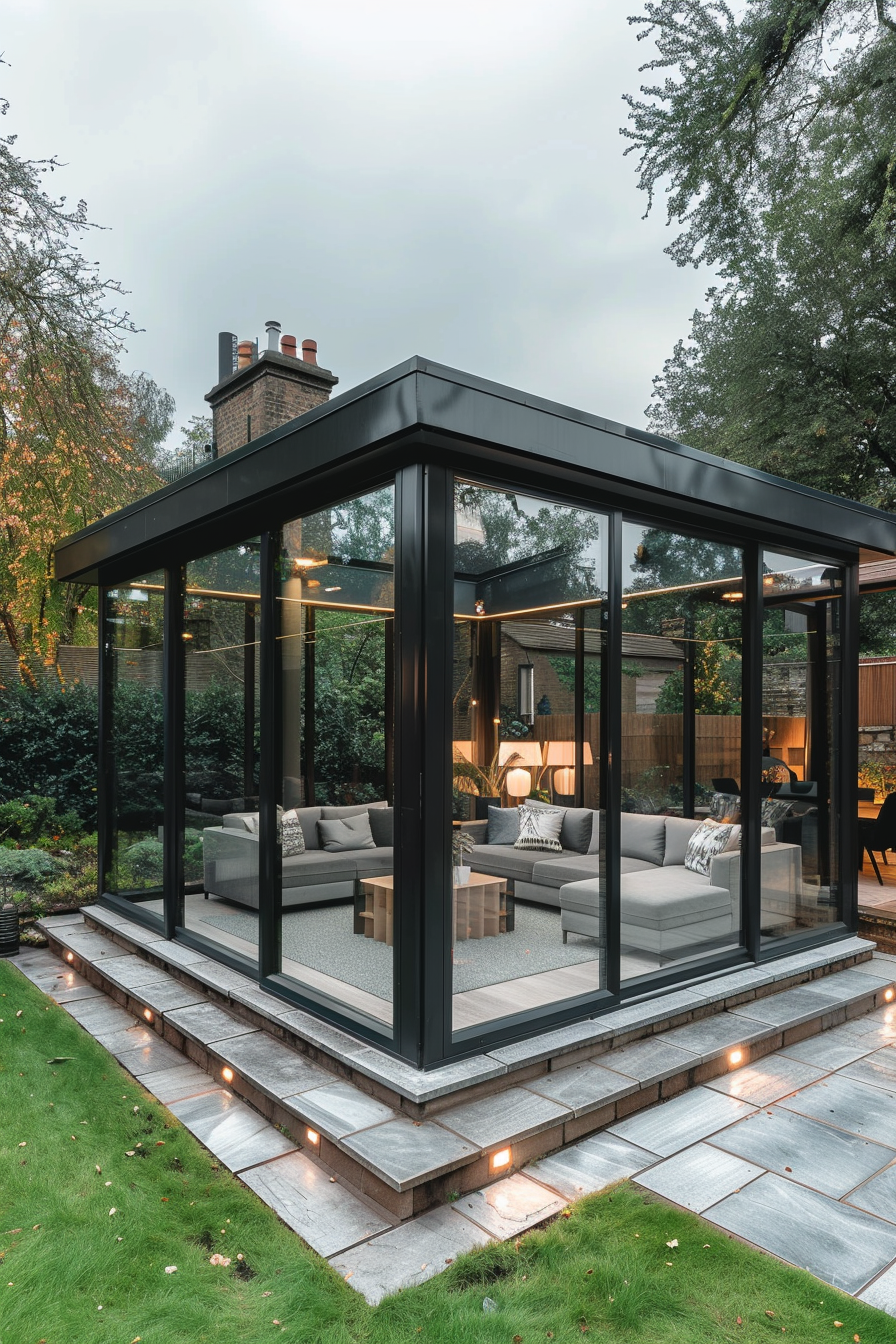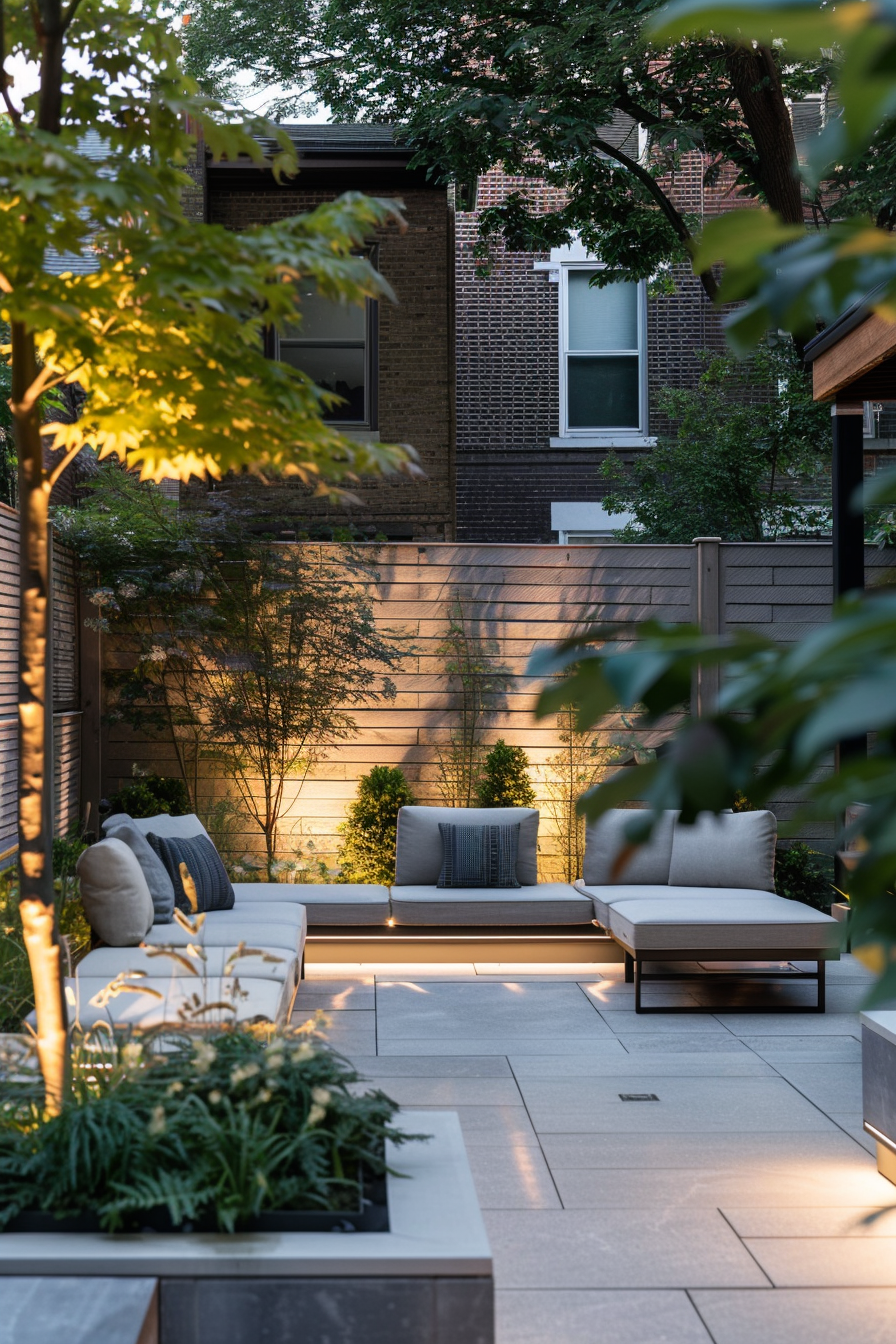
Today we’re going to talk a bit about cosy gardens for wheelchair users.
It’s important to ensure accessibility for everyone; a garden needs to be inclusive, and diversity must be part of its structure, meaning it should welcome everyone!
As difficult as it might seem, there’s absolutely no secret to creating an accessible garden …. zero difficulty, really.
In fact, you might find that if it works for people in wheelchairs, it works for those who aren’t as well.
Start with the paths.
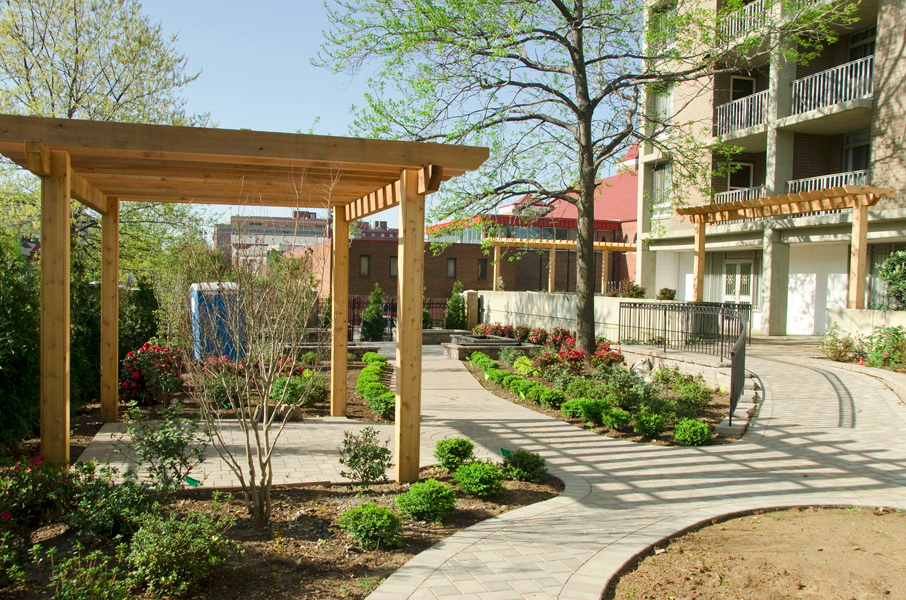
They need to be wide, smooth, and have a clear start, middle, and end…
in other words, there’s no point building a wheelchair-accessible path if it doesn’t actually lead to where people will be sitting. They (or you) need to be able to enter the garden, get to a point, and return comfortably.
So, choose smooth paving (no steps or uneven surfaces). Gravel might look lovely in photos but in this circumstance, it’s not practical at all.
The garden beds too
……… they shouldn’t be too low or too high. Opt for something about knee height so that everyone has access.
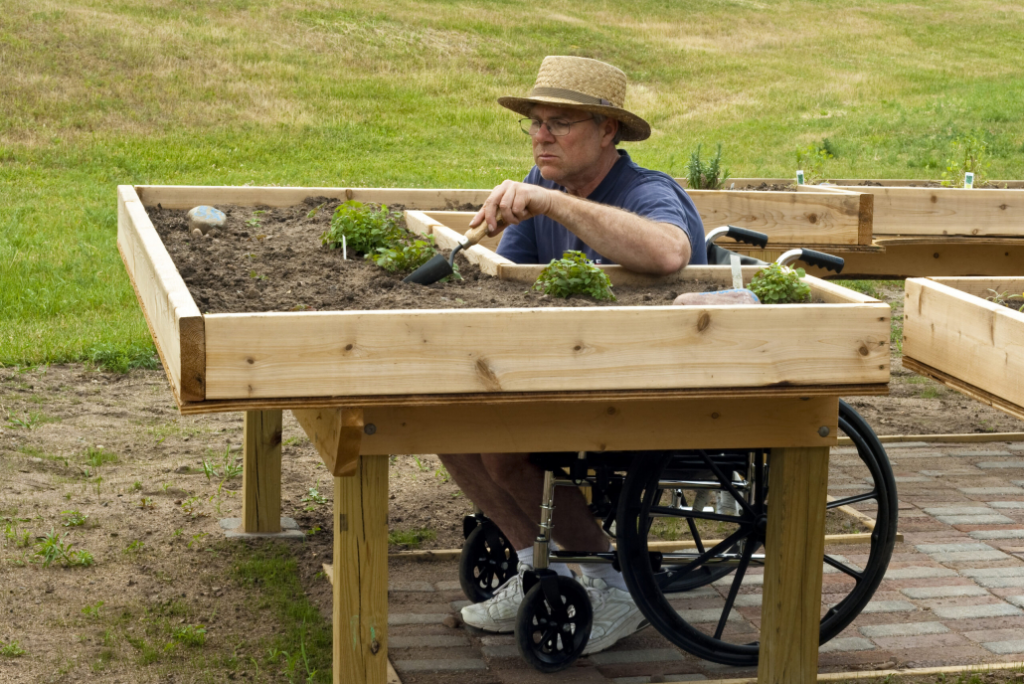
I don’t need to tell you not to put anything in the way, right? I won’t repeat it all the time because I know you have good sense! 🙂 Any object or item that could cause someone to trip is dangerous. Avoid it!
This includes those gnomes you have lining the path to your door, and garden hoses too … keep them coiled up (or you can even bury them near walking areas).
It’s also good to use lightweight materials, like plastic planters, galvanised steel, or even recycled plastic , they’re easier to move and less likely to cause injury if bumped into.
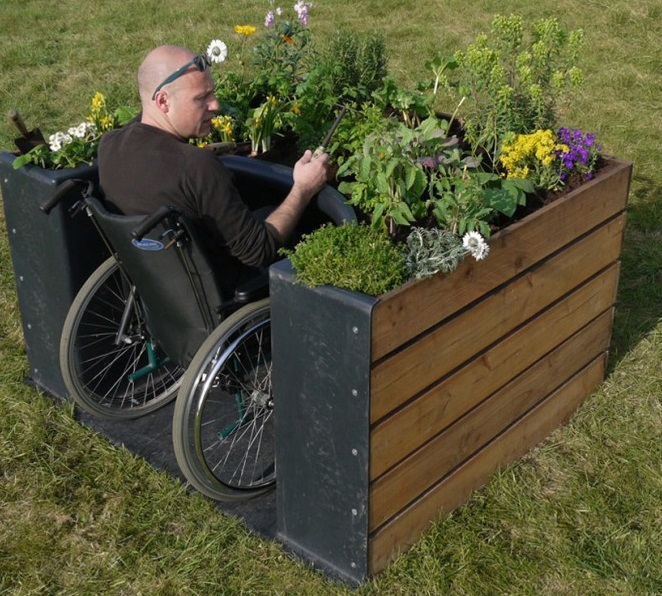
If you’re worried about the design, don’t stress! Give everything a coat of paint, preferably all the same colour for a cohesive look, and I guarantee it’ll turn out great!
Be careful with gates too , they need to be wide enough and, in some cases (and whenever possible), just leave them off altogether!
Tools are where things get fun.
Forget the standard trowel… opt for ones with bendy handles.
Long-reach pruners are a game-changer for those “just out of grasp” branches, and a mobile potting station on wheels means you can cart soil around without doing your back in.
Pro tip: vertical planters hung at eye level turn boring walls into living art galleries. Strawberries, ivy, even a mini herb garden… all within reach and safe from curious cats (mostly).
the furniture
it’s good to use tables that allow a wheelchair to fit underneath — avoid those long wooden benches, or at least only use them on one side, leaving the rest of the table and space free.
A fire pit that you can control … you should keep it at a temperature good for toasting marshmallows without burning knees. (Be sure to check local laws, as some places have very specific rules about fire pits.)
Since it’s an outdoor garden, always opt for waterproof furniture and coverings whenever possible …… waterproof cushions are especially important for wooden benches.
Make good use of all the senses .. plant for scents and textures as we discussed earlier, and always at a medium height.
Remember that wheelchair users also need room for manoeuvring, so if you have the space, create some turning areas so they can rotate their chair and always stay facing the path.
Finally, the golden tip: think carefully. If you’re creating a garden for someone in a wheelchair, talk to them. You’ll realise that almost no gardens are truly accessible.
Don’t forget about lighting ! nothing too harsh, always with the light bouncing softly, and prioritise illuminating the paths.
So yeah, your garden might have a few quirks… wonky planters, slugs that treat your lettuce like an all-you-can-eat buffet, or a rosebush that blooms once every leap year.
But when you’re out there, tea in hand, bees buzzing, and the sun finally peeking through the clouds?
You’ll realise it’s not about perfection. It’s about making space for joy, muddy wheels and all.
Lastly, remember to keep maintenance simple. Choose plants that are hardy and require minimal care, so the garden remains welcoming without constant heavy work.
A well-designed, low-maintenance garden can be enjoyed all year round, bringing happiness without the burden of endless upkeep
Now, pass the biscuits and let’s get planting.